If you could use some assistance when venturing into the world of spatial planning, urban development or architecture. If you are wondering whether you can build on your site, whether you should build, how you should go about it.
Location
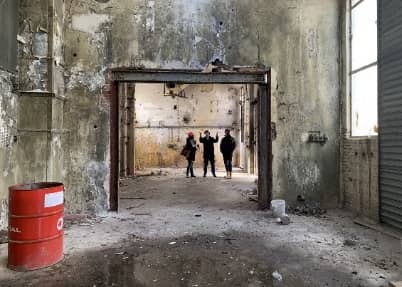
Do you know what the qualities of your location are? Are you looking for what is important in the location? Are you concerned whether people understand what you see in the location where you want to build?


Building
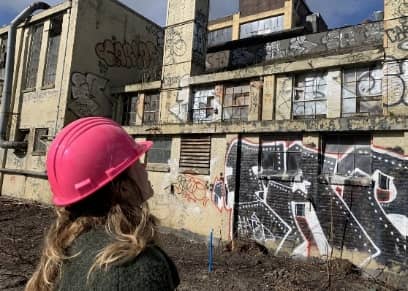
But also if you are considering what you could do with this building. Would this be suitable for me or my organisation? Should I purchase this building?


Selecting a designer
If you are uncertain about which architect, urban planner, or landscape architect to select to assist you, we can assist you in making your selection or decisions. We can take charge of supervising the architect, either with you or on your behalf.
We can also conduct a design study to better define the task you wish to assign to the architect.

How do I make the architect understand what I want?
We know from research and our own experience that designers immediately start conceiving ideas and researching them.
Clients say: ‘… the hardest thing is to get the architect to distance themselves from the ideas they already have in their head, when we haven’t even had a proper discussion yet.’


That is why it is better to be well prepared before meeting with a designer.


Design-based research
We have found that it can be effective to first sketch out ideas to explore the direction in which a solution should be sought. Because the design-based researcher does not necessarily have to be the architect who carries out the work, it is possible to think and act more freely. It is also possible to discuss the project with the final architect on a collegial level, using the same jargon as necessary.
For example


GLA wrote a programme of requirements for a large vocational college in Iceland. This consisted of a conceptual plan, a spatial plan, a numerical plan and a preliminary design, which were developed simultaneously with the programme of requirements. Both influence each other; the figures and spatial consequences are identified and adjusted on the basis of an assessment of the consequences. This involves the schematic construction of a programme of requirements on paper.
We developed this methodology for Taekniskólinn in Reykjavik. A tender has now been launched based on our work, which will enable the selection of the Icelandic architect to take place.